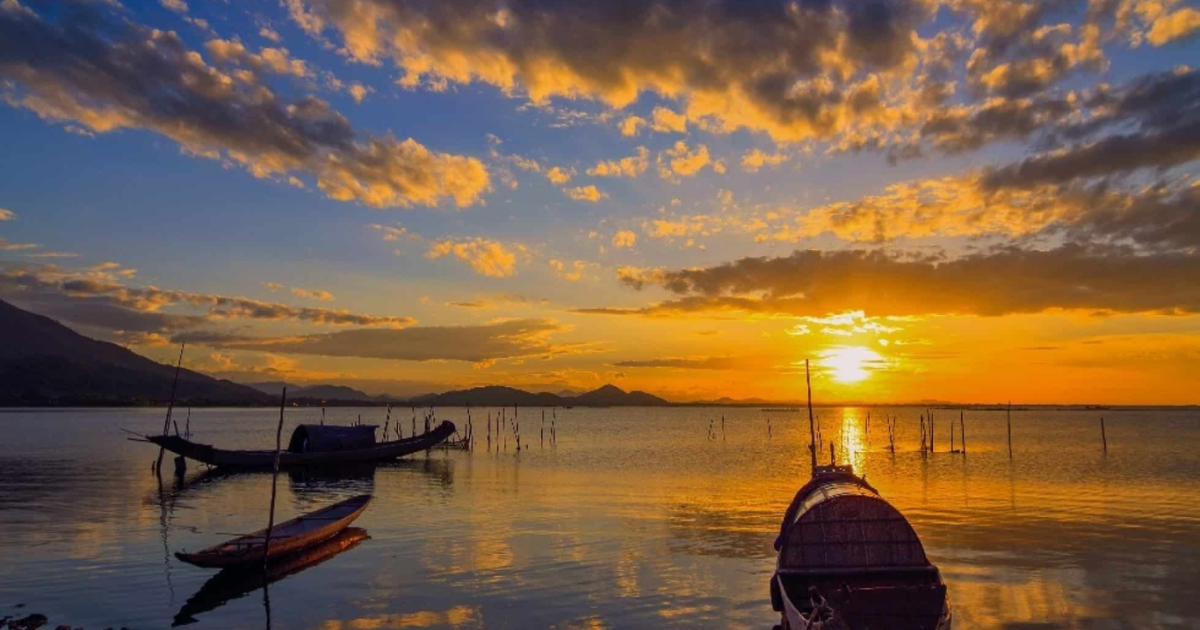
Tam Giang Lagoon Sunset: Must-See Floating Life & Photography Spots
Discover the ethereal beauty of the Sunset on Tam Giang Lagoon – Southeast Asia’s largest brackish water lagoon. A detailed guide to authentic floating life experiences with local fishermen, savoring fresh seafood, and a crucial list of must-see photography spots.
I. Tam Giang Lagoon overview: The Brackish water gem of Hue
Tam Giang Lagoon, an integral part of the extensive Tam Giang – Cau Hai lagoon system, is a unique natural wonder, stretching approximately 24 kilometers across three districts of Thua Thien Hue province: Phong Đien, Quang Đien, and Hương Tra. It is officially recognized as Southeast Asia’s largest brackish water lagoon, serving as a vital economic and cultural lifeline for the local population.
1. Strategic Ecological Position and Value
The geographical location of Tam Giang Lagoon is exceptionally unique, situated at the confluence of major rivers (Huong, Bo, and O Lau) and the East Sea via the Thuan An inlet. This delicate blend of fresh and saltwater creates a nutrient-rich brackish environment, sustaining a diverse aquatic ecosystem, including prized species like striped shrimp, grouper, and clam. This immense natural wealth has shaped the simple yet persistent way of life for the local inhabitants. It is due to these unique values that Tam Giang Lagoon remains an unmissable destination.

2. The Endless Allure of the Sunset
While Tam Giang is beautiful throughout the day, the sunset hour is the “trademark” that captivates every photographer and traveler. As the sun begins its descent, the expansive water surface is painted in brilliant hues of golden-orange, gradually transitioning into romantic purples and deep indigo. This magnificent scene transforms the boats and fishing traps into silhouetted subjects full of artistic merit. This unique Ancient Capital Charm leaves a profound impression on all who witness it.
II. The floating life experience
The heart of the Tam Giang discovery lies in exploring the profound floating life (often referred to as noi dong life) – a lifestyle that is deeply authentic and fundamentally different from life on the mainland. This experience requires active participation, allowing travelers to truly grasp the culture and sustainable livelihoods of the local community.
1. Boat excursions and understanding the Fishing Trade
The floating life experience begins by hiring a small local boat (do ngang). The fishermen are not just boat operators; they are the best cultural guides for the area.
Deciphering Traditional Fishing Gear: No, Sao, and Fixed Traps
Throughout the lagoon, travelers will frequently see structures made of bamboo and nets called No and Sao. These are fixed fishing installations, constructed based on meticulous calculations of tidal flow and the migratory habits of aquatic species.
-
Participating in the “Do No”: Around 4:30 PM, the time when fishermen harvest their catch, travelers can join the activity known as “Do No” – retrieving the fish and shrimp from the traps. This offers a firsthand, vivid perspective on the daily livelihood routine within Tam Giang Lagoon.

The Delicacy of the Vo Rao (Lift Net)
Besides the fixed traps, the image of the Vo Rao – a large net system raised and lowered using a pulley or winch – is another aesthetic highlight. These large nets are not only productive tools but also visually striking elements in the landscape, especially when active under the crimson light of dusk.
2. Adaptive Architecture and the Nha Cho Culture
The human adaptation to the brackish water environment is evident in the unique architecture of the Nha Cho (stilt houses) and the wooden bridges connecting the land.
Nha Cho – Shelter and Business Hubs

-
Structure: Nha Cho are simple, small stilt houses built on sturdy bamboo or concrete pilings directly on the water. They were originally used as watch posts for fishing gear and temporary resting places, but have now evolved into popular floating restaurants serving visitors.
-
Wooden Bridges: To connect the stilt houses to the shore and to each other, the locals built a network of winding, rustic wooden bridges. These simple structures add a soft, folksy line to the vast expanse of water, creating a perfect, tranquil backdrop for photography.
Experiencing Clam Catching (Dap Tria) and Community Spirit

-
The Dap Tria Activity: This is one of the most unique activities here. Locals use their bare feet to “pedal” (dap) into the lagoon mud, sensing the location of the Tria (a type of hard-shelled clam) and then catching them by hand. Participating in this activity requires patience and subtle sensing, giving travelers a deeper appreciation for the resourceful nature of the fishermen.
-
Community Bonds: The strong communal spirit of the Tam Giang fishermen is evident in their mutual support, sharing fishing knowledge, and assisting each other during rough weather. The slow, peaceful pace of life at Tam Giang Lagoon offers a rare sense of tranquility.
3. The Wild Beauty of Ru Cha Mangrove Forest

Ru Cha, an ancient, dense mangrove forest, is an essential stop on the Tam Giang exploration route. It offers an ecological environment distinctly different from the open water.
-
Eerie Charm: The Cha trees (a type of mangrove) with their ancient, twisted roots create an atmosphere that is simultaneously wild and mysteriously serene. The forest is especially captivating during the leaf-changing season (around September to November) when the foliage turns golden-brown, appealing to those seeking a raw, evocative beauty.
-
Ecological Value: Ru Cha acts as a crucial “green lung,” protecting the lagoon from erosion and serving as an important habitat for various birds and aquatic life.
III. Tam Giang Lagoon Cuisine
Cuisine is an inseparable part of the floating life experience. The seafood in Tam Giang is renowned for its exceptional freshness and superior quality, a result of thriving in the balanced brackish water environment.
1. The “Brackish Water King” Delicacy Collection

Living in a balanced brackish habitat, Tam Giang seafood possesses a uniquely rich and sweet flavor profile that is hard to match elsewhere.
-
Kinh Fish (Grouper) with Chili and Lemongrass: Kinh fish is considered the “king” of the lagoon, with sweet, firm, and non-fishy flesh. The dish, stewed with bold chili and lemongrass, is a must-try culinary highlight during your visit to Tam Giang Lagoon.
-
Tiger Prawns and Clams: The natural tiger prawns here are large, firm, and exceptionally sweet. Clams (Tria) are typically grilled with spring onion oil or cooked into savory porridge, a local, nutritious meal often enjoyed by the fishermen.
-
Other seafood varieties: There are also oysters, rabbitfish, and especially dishes made from mẹ (horseshoe crab) — a rare delicacy that offers visitors a uniquely memorable culinary experience.

2. The Romantic Dinner on a Floating Nha Cho
Dining in one of the floating restaurants (Nha Cho) amidst the lagoon is a uniquely romantic experience. In the tranquil, open-air setting, guests savor the freshest seafood while watching the distant, twinkling lights of the fishing boats, creating an unforgettable sensory memory.
IV. Sunset and unforgettable Arctic photography spots
While photography is not the sole focus, the sunset moment is the perfect culmination of a full day of exploration. This is when the artistic beauty of the lagoon reaches its peak.
1. The Moment of Light Transition
The sunset over Tam Giang Lagoon lasts approximately 45 minutes, starting around 4:45 PM. The light transitions from blazing yellow and fiery orange to pink-purple, finally settling into deep indigo. Crucially, the calm water acts as a massive mirror, intensifying the colors and depth, making the scene truly mesmerizing.
-
Light Technique: The ethereal purple-pink glow spreads, turning the boats, traps, and hardworking fishermen into highly artistic subjects. This is the optimal time to capture emotionally charged silhouette photographs.

2. Strategic Photography Spots
To maximize the photography experience, choosing the vantage point is key:
| Location | Description of Angle and Unique Features | Suggested Framing |
| Tam Giang Bridge (National Highway 49B) | A high vantage point offering a wide, panoramic view of the entire lagoon. Ideal for panoramic shots or capturing the distant silhouettes of boats and fishermen. | 4:30 PM – 5:15 PM |
| Ngu My Thanh Wharf | The main starting point for boat tours. A gathering place for boats and fishermen, perfect for close-up shots of daily life. | 4:45 PM – 5:45 PM |
| Mid-Lagoon (on the Boat/SUP) | The most direct view, unobstructed by the shoreline. Requires hiring a boat to venture out. | Capturing the direct silhouette of yourself or boats against the brilliant sky as the sun dips. |
| Dam Chuon Nha Cho Area | Wooden bridges and stilt houses create unique leading lines and compositions. Frame the twilight glow behind the floating structures. | 4:45 PM – 5:45 PM |
3. Tips for Silhouette Photography
To honor the image of the fishermen’s resilience, the silhouette technique is paramount. Position the subject (boat, fisherman, trap) in the frame, lock the exposure on the brightest part of the sky, allowing the subject to become a sharp, dark mass against the radiant background.
V. Complete travel guide and accommodation
To ensure a perfect trip to Tam Giang Lagoon, careful planning regarding timing and services is essential.
1. Ideal Travel Period
-
Dry Season (March – August): The weather is sunny with minimal rain, making it ideal for sunset viewing and water activities. This is also the peak fishing season, with an abundance of seafood.
-
Timing: Start your journey from Huế around 2:30 PM to allow ample time for the boat trip, local experience, and sunset viewing.

2. Logistics and Service Ethics
-
Boat Rental and Community Support: Prioritize renting boats directly from fishermen at the Ngu My Thanh or Đam Chuon wharves. This not only offers better pricing but is also the most direct way to support the local community, ensuring the most authentic experience on Tam Giang Lagoon.
-
Rustic Accommodation: Accommodation options near the lagoon are primarily homestays and small guesthouses run by locals. Staying here allows you to experience the lagoon’s sunrise and the absolute tranquility of the floating life.
Conclusison
Tam Giang Lagoon is more than just a scenic spot; it is a rich cultural, economic, and ecological space. The journey of discovery here extends beyond admiring the mystical beauty of the sunset; it involves a deep appreciation for the resilient floating life, the sophistication of the brackish water cuisine, and the profound peace gifted by nature. This is a journey that every traveler visiting the Ancient Capital Charm of Huế should dedicate a full afternoon to experience.
With Simply Vietnam Travel, every detail of your trip is carefully planned. As experts in Central Vietnam tours, we offer diverse itineraries combining sightseeing, relaxation, and local cuisine for a truly memorable journey.
A Central Vietnam adventure will be far more exciting when you simply bring your sense of exploration, while the planning is handled by Simply Vietnam Travel.
Contact us through the following channels for free consultation:
- Fanpage: Simply Vietnam Travel
- Hotline: +84 793553385
Tam Giang Lagoon: Frequently asked questions (FAQS) for visitors
What is the best time to visit and watch the sunset over Tam Giang Lagoon?
The best time is during the summer (from April to August) due to minimal rain and high-intensity, vibrant sunset colors. You should arrive at the lagoon around 4:30 PM to hire a boat and catch the sunset (which usually occurs between 5:00 PM and 5:30 PM).
How can I experience the “Floating Life” most authentically at Tam Giang Lagoon?
You should hire a local small boat (đò ngang) at wharves like Ngu My Thanh or Đam Chuon. This direct experience allows you to join fishermen to “Do No” (harvesting fish/shrimp) and talk about their trade, while enjoying seafood right at the floating stilt houses (Nha Cho).
Which specialty seafood dishes are a must-try when visiting Tam Giang Lagoon?
The most famous specialties are Kinh Fish (often braised with chili and lemongrass or grilled), Tiger Prawns (steamed or grilled), and Tria Clams (often grilled with spring onion oil or cooked into porridge). The seafood here has a distinct, sweet, and rich flavor due to the brackish environment.
Is Ru Cha part of Tam Giang Lagoon, and when is the best time to visit Ru Cha?
Yes, Ru Cha is an ancient mangrove forest within the Tam Giang Lagoon system. Ru Cha is most beautiful during the leaf-changing season, usually from September to November annually, when the entire forest turns a wild, mystical yellow hue.
Where are the best photography spots for the Tam Giang Lagoon sunset?
There are three best photography locations:
1. Tam Giang Bridge (on National Highway 49B): For panoramic, elevated shots.
2. Mid-Lagoon (on a boat): Ideal for capturing silhouettes of boats and fishermen.
3. Đam Chuon Stilt House Area: Captures wooden bridges and stilt houses against the twilight sky.