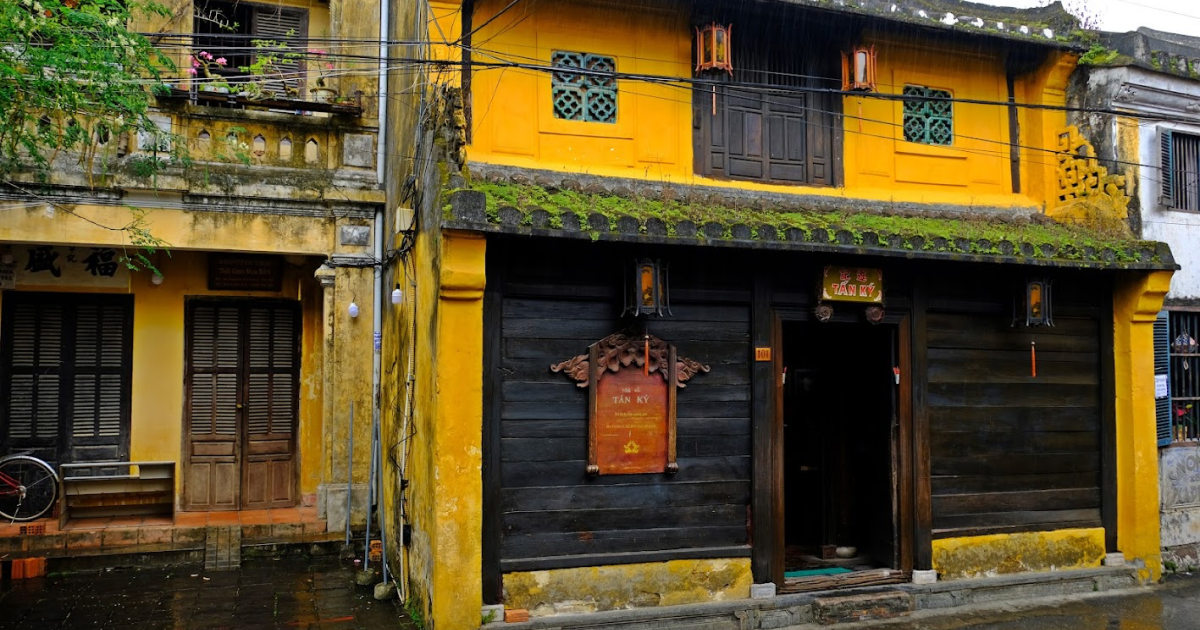
Tan Ky Ancient House: Complete Guide to Hoi An’s 200-Year-Old Merchant Home
Hoi An Ancient Town, a UNESCO World Heritage site, is a mesmerizing tapestry of history, culture, and architecture. While the entire town is a living museum, few places capture its enduring spirit quite like the Tan Ky Ancient House. Located at 101 Nguyen Thai Hoc Street, this remarkable structure is not just a house; it is a profound historical document, a testament to Hoi An’s golden age as a bustling international trading port.
The Historical Tapestry
To truly appreciate Tan Ky Ancient House, one must understand its rich historical context. Its story is inextricably linked with the rise and fall of Hoi An as a major Southeast Asian trading hub.
Humble Beginnings and the Le Family Dynasty
The house was first erected in 1741 during a period of immense prosperity in Hoi An, an era when merchants from China, Japan, and Europe converged here to trade. A Vietnamese family named Le built the house and established themselves as prominent merchants in agricultural trade.

The house was later given its enduring name, “Tan Ky,” by the second generation of the family. The name itself is steeped in cultural meaning, translating roughly to “Progressing to Prosperity” or “Establishment of Prosperity.” This name perfectly encapsulated the family’s ambition and the burgeoning success of Hoi An’s merchant class.
Today, the house remains under the meticulous care of the Le family—now spanning seven generations—making it one of the few private homes in the Ancient Town that has been continually occupied and preserved by the same lineage.
A Test of Time
One of the most remarkable aspects of the house’s history is its resilience against the elements. Hoi An is prone to severe annual flooding from the Thu Bon River.
A particularly devastating flood occurred in 1964, which submerged the entire ground floor of the house. Visitors today can still see the historical flood markers etched onto one of the wooden columns, serving as a sobering reminder of the challenges the family faced and their enduring commitment to preserving their home.
Recognition and Legacy
Tan Ky Ancient House’s immense cultural and historical value has been formally recognized on an international level:

-
National Historical and Cultural Monument (1990): Vietnam’s Ministry of Culture formally recognized the house’s importance.
-
UNESCO World Cultural Heritage Site: The house is an integral part of the Hoi An Ancient Town area, which was designated a UNESCO World Heritage Site in 1999.
This dual recognition solidifies the house’s status as a must-visit destination, a “living museum” that offers authentic, tangible history unlike any other site in the town.
The Architectural Marvel
What truly sets Tan Ky Ancient House apart is its extraordinary architecture. It is a harmonious blend of Vietnamese, Chinese, and Japanese styles, reflecting Hoi An’s multicultural past as a bustling commercial port. This unique synthesis makes it a microcosm of the town’s entire cultural identity.
The “Tube House” Design
The house adheres to the traditional Vietnamese “Ong house” (tube house) style, which is characteristic of the Ancient Town.

-
Structure: It has a narrow front facing the street but extends deep inward, creating a tubular layout. The house is divided into three main compartments and features two floors.
-
Dual Facade: Functionality was key for a merchant’s home. The front entrance on Nguyen Thai Hoc Street served for trade, while the back opened onto Bach Dang Street by the Hoai River — a vital route for loading and unloading goods, reflecting the family’s merchant past.
A Nail-less Masterpiece
Perhaps the most astonishing feature is that the builders constructed the house almost entirely without using metal nails.

-
Kim Bong Carpentry: The house was built by highly skilled artisans from the famed Kim Bong Carpentry Village (which you can visit today).
-
Interlocking Joints: The artisans utilized sophisticated traditional Vietnamese carpentry techniques, relying on perfectly carved and fitted wooden joints and tenons to hold the entire structure together. This technique, combined with the use of high-quality, durable materials, is the main reason the house has survived centuries and countless floods.
The Cultural Synthesis: Vietnamese, Chinese, and Japanese Elements
The genius of Tan Ky’s design lies in its seamless integration of regional influences:
| Cultural Influence | Architectural Feature | Description |
| Vietnamese | Materials & Layout | Utilizes traditional high-quality local wood (ironwood, jackfruit wood), Bat Trang floor tiles for coolness, Thanh Hoa stone for column bases (to prevent rot during floods), and the classic yin-yang tiled roof. |
| Chinese | Decorative Carvings | Seen in the ornate carvings on wooden columns and beams, featuring dragons, mythical creatures, and Chinese couplets wishing for wealth and happiness. |
| Japanese | “Eye of the Sky” | The unique, three-level wooden ceiling above the atrium or courtyard (the central open area). This Japanese-influenced design element allowed for natural light and ventilation, serving as a simple but effective air conditioning system in the tropical climate. |
Treasures Within the Walls: Priceless Antiques and Artifacts
Tan Ky Ancient House is more than just an architectural wonder; it is a repository of priceless antiques, each telling a piece of the family’s and Hoi An’s story.
The Legendary Confucius Cup
The most famous artifact in the house is the “Confucius Cup” (or the “Cup of Moderation”)

-
The Lesson: This cup is a simple clay vessel designed to hold liquid only up to a certain, moderate level (around 80%). If you attempt to fill it any higher, the liquid will drain out entirely through a hidden mechanism.
-
The Meaning: The cup is a philosophical reminder, inspired by the teachings of Confucius, to live in moderation and avoid greed or excess. It serves as a valuable, timeless lesson passed down through the generations of the merchant family.
The Bach Đieu (One Hundred Birds) Lacquered Board
Another highlight is the magnificent, massive “Bách Điểu” (One Hundred Birds) horizontal lacquered board.
-
Artistry: This ancient board features an exquisite carving of one hundred birds, each one unique, surrounding a central Chinese character symbolizing longevity and happiness.
-
Unique Feature: The characters used on the board are written in an artistic style that blends traditional Chinese with Vietnamese calligraphy, another subtle reflection of the house’s cultural fusion.
Family Furnishings and Memorabilia

Throughout the ground floor, which is open to the public, you will observe original family furniture, ceramics, and artifacts . These items offer intimate insights into the opulence and daily routines of a wealthy merchant family two centuries ago. The family lives in the private upper‑floor quarters, keeping the house as an active, private residence.
Planning Your Visit
To ensure a smooth and enriching experience, here is the critical information you need to plan your trip to Tan Ky Ancient House.
Location and How to Get There
-
Address: 101 Nguyễn Thái Học, Phường Minh An, Hội An, Quảng Nam, Vietnam.
-
Access: The house is located right in the heart of the Hoi An Ancient Town, a short walk from other major landmarks.

You can reach it with a 3–5 minute walk from the famous Japanese Covered Bridge.
The Ancient Town is a pedestrian and bicycle-friendly zone. It is best to reach the area by foot, bicycle, or cyclo (a traditional three-wheeled taxi).
Opening Hours and Ticket Information
-
Operating Hours: The house is generally open daily from 8:00 AM to 5:45 PM (Hours can vary slightly, so checking locally is always recommended).
-
Ticket Price:
To visit Tan Ky Ancient House, you must first purchase a general Hoi An Ancient Town Entrance Ticket. This main ticket (currently around 120,000 VND for international visitors, but prices are subject to change) grants you access to the pedestrian zone and allows you to visit a select number of attractions (typically 5 out of 22 key sites, including museums, assembly halls, and old houses like Tan Ky).
Note: You use one of your allotted coupons from the main ticket to enter Tan Ky Ancient House.
-
Recommended Time: The visit typically lasts 20–30 minutes. It is best to visit either early in the morning (8:00 AM) to avoid large tour groups and the midday heat, or in the late afternoon.

Visitor Guidelines and Tips
-
Guided Tours: English-speaking family members are usually on-site to provide a brief, informative tour or commentary upon entry. We highly recommend this to fully appreciate the architecture and artifacts.
-
Photography: Photography is generally permitted, but visitors are asked to be respectful, especially in the central worship and living areas.
-
Respect the space by staying quiet, avoiding contact with ancient artifacts, and honoring the privacy of the Le family who lives upstairs.
-
Souvenirs: A small area at the back of the house often features a selection of high-quality local crafts and souvenirs for purchase.
Beyond the House: Nearby Hoi An Attractions
You can easily combine a visit to Tan Ky Ancient House with exploring the incredible sights around it, all within walking distance.
The Japanese Covered Bridge (Chua Cau)

Just a stone’s throw away, this iconic 16th-century bridge is an emblem of Hoi An’s fusion history. Originally built by the Japanese community to link them with the Chinese quarters, it remains one of the town’s most photogenic spots.
Phuc Kien (Fujian) Assembly Hall
This beautifully ornate Assembly Hall served as a spiritual and social center for the Fujian Chinese community. People know it for its intricate temple architecture, stunning red lanterns, and dedication to the Goddess of the Sea, Thien Hau.
Hoi An Market
Located on Bach Dang Street near the river, the bustling market offers a vibrant sensory experience. It’s the perfect place to sample local street food, buy fresh produce, or shop for souvenirs like Hoi An’s famous paper lanterns.

Hoai River Waterfront
The area behind Tan Ky Ancient House offers picturesque views of the Hoai River. Take a relaxing sampan boat ride in the late afternoon to witness the sunset over the Old Town, or return at night to see the river illuminated by hundreds of colorful floating lanterns.
Conclusion
Tan Ky Ancient House is more than just a historical building; it is a profound cultural experience. It stands as a powerful symbol of Hoi An’s rich merchant heritage, its resilience against the forces of nature, and the spectacular fusion of Vietnamese, Chinese, and Japanese artistry.
For travelers wanting to connect with Hoi An’s soul, visiting this 200-year-old home is essential. Stepping through its wooden doors, you don’t just see history — you feel the echoes of a prosperous past and a family’s enduring legacy.
With Simply Vietnam Travel, we carefully plan every detail of your trip. As experts in Central Vietnam tours, we offer diverse itineraries combining sightseeing, relaxation, and local cuisine for a truly memorable journey.
A Central Vietnam adventure will be far more exciting when you simply bring your sense of exploration, while the planning is handled by Simply Vietnam Travel.
Contact us through the following channels for free consultation:
- Fanpage: Simply Vietnam Travel
- Hotline: +84 793553385
Frequently Asked Questions (FAQ) about Tan Ky Ancient House
Does the original family still inhabit Tan Ky Ancient House?
Yes, Tan Ky Ancient House is remarkably still inhabited by the original family—the Lê family—spanning seven generations of continuous ownership and meticulous preservation. While the ground floor is open for public tours, the family maintains their private living quarters on the upper floor, making it a truly “living museum” in the heart of Hoi An Ancient Town.
Where do I buy tickets to visit Tan Ky Ancient House?
To visit Tan Ky Ancient House, you must first purchase the general Hoi An Ancient Town Entrance Ticket. This main ticket includes coupons, and you use one of these coupons to gain entry to the house. The ticket booth is located near the entrance to the Ancient Town pedestrian area (e.g., at 78 Lê Lợi Street or near the Japanese Covered Bridge).
What is the significance of the Confucius Cup artifact at Tan Ky Ancient House?
The Confucius Cup is the most famous artifact in Tan Ky Ancient House. Designers created it as a philosophical vessel that drains all liquid if filled beyond 80%. Its significance lies in its symbolism: it serves as a timeless reminder, inspired by the teachings of Confucius, to live with moderation and avoid greed or excess, a valuable lesson for the merchant family throughout its history.
What architectural styles does Tan Ky Ancient House blend?
Tan Ky showcases a unique and harmonious blend of three major architectural styles:
-
Vietnamese (the overall “tube house” design and local materials).
-
Chinese (elaborate wooden carvings and decorative couplets).
-
Japanese (the three-level ceiling in the central atrium, often called the “Eye of the Sky,” designed for natural ventilation).
Did Tan Ky Ancient House survive the major floods in Hoi An?
Yes, Tan Ky Ancient House famously survived severe historical floods, including a particularly devastating one in 1964. People attribute its resilience to its unique nail-less construction (which relies on perfectly fitted wooden joints) and the use of strong, water-resistant materials. Visitors can still see the historical flood markers etched onto a column on the ground floor as a testament to its endurance.